
Home » Must-Have Mobile App Features That Users Expect in 2026
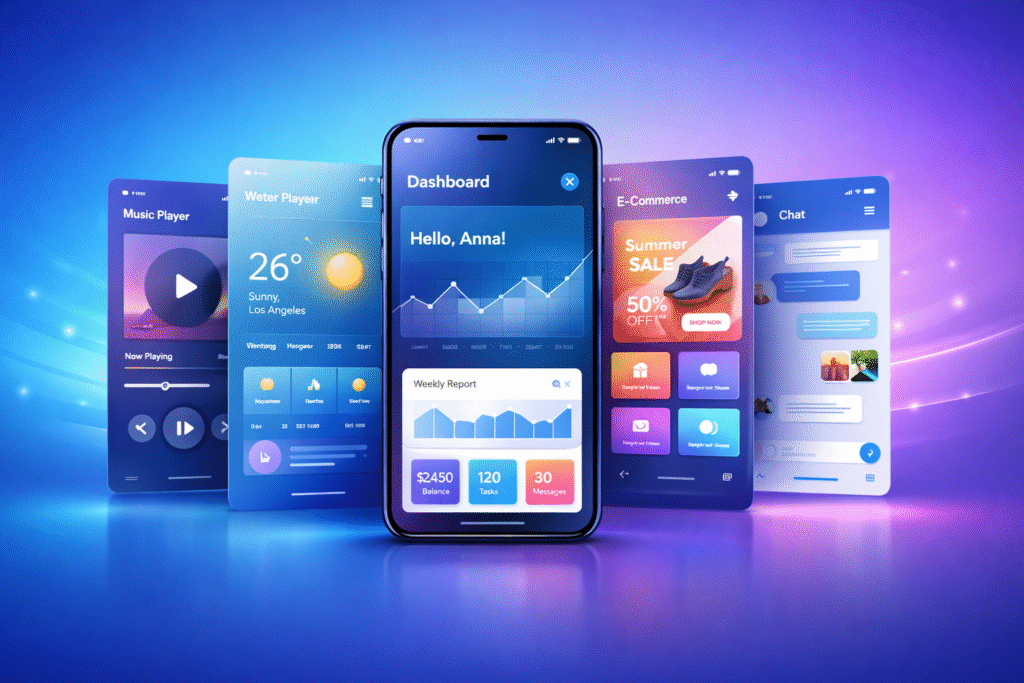 Must-Have Mobile App Features That Users Expect in 2026
Let’s be honest — mobile apps are no longer a luxury. They’re a daily necessity. From ordering food and booking cabs to managing finances and attending classes, everything lives inside our smartphones. If your business doesn’t have one (or has a poorly designed one), you’re already behind.
But here’s the real question: what actually makes mobile apps successful in 2026?
It’s not just about launching an app. It’s about building something fast, secure, user-friendly, and future-ready. In this blog, we’ll break down the must-have features, innovative app features, performance factors, and everything else you need to know.
Before we dive deep, let’s quickly understand the basics.
What is mobile application with example?
A mobile application is a software program designed to run on smartphones, tablets, or other portable devices. These apps work on platforms like Android and iOS.
Examples:
WhatsApp (messaging)
Google Maps (navigation)
Amazon (e-commerce)
Paytm (digital payments)
In simple terms — if you open something on your phone that isn’t a website, it’s probably one of the many mobile apps you use daily.
If we explain this in very simple language (like an Introduction to mobile apps class 7 level):
A mobile app is a program made to help people do tasks easily on their phones. It can help in learning, playing games, shopping, chatting, or booking tickets. Mobile apps make life simple and fast because everything works with just a few taps.
Now let’s move to the real deal — features that matter in 2026.
Here’s a practical app features list that every modern application should include:
No one likes a confusing design. The best mobile apps focus on:
Easy navigation
Clear buttons
Minimal clutter
Smooth animations
Users should understand your app within seconds.
Nobody waits for slow apps anymore.
Performance:
The app should load quickly, respond instantly, and work smoothly without crashes. Optimized code, lightweight design, and good backend infrastructure ensure strong performance.
Security:
Security is critical in mobile apps, especially for banking, healthcare, and e-commerce. Features like data encryption, secure login, two-factor authentication, and regular updates protect user data.
Modifiability:
A good mobile application must be easy to update and modify. Technology changes fast, so developers should design apps in a way that allows adding new features without rebuilding everything.
In short: Fast + Secure + Flexible = Winning formula.
Cyber threats are increasing. Modern mobile apps must include:
Biometric login (Fingerprint / Face ID)
Two-factor authentication
Data encryption
Secure cloud storage
Users trust apps that protect their personal information.
Your app should work smoothly across devices and systems.
There are mainly two device platforms:
Android
iOS
Some businesses build native mobile apps (separate for each platform), while others use cross-platform technologies like Flutter or React Native to build once and deploy everywhere.
Compatibility is not optional anymore — it’s mandatory.
Internet isn’t always available. Smart mobile apps allow:
Viewing saved content offline
Draft saving
Background syncing
This improves user satisfaction significantly.
Push notifications are powerful — but only if used wisely.
Good notifications:
Remind users of offers
Update about important activity
Provide personalized recommendations
Bad notifications:
Spam users
Appear too frequently
Feel irrelevant
Smart engagement increases retention.
In 2026, users expect more than basic functionality. Here are some innovative app features trending right now:
AI-powered chat support
Voice search integration
Personalized dashboards
AR (Augmented Reality) previews
Real-time tracking
Smart recommendations
Innovation helps mobile apps stand out in a crowded market.
Users hate long registration forms.
Best practices:
Social login (Google, Apple, Facebook)
OTP verification
Quick onboarding tutorial
Guest mode option
First impressions matter a lot.
In Human-Computer Interaction (HCI), mobile apps are categorized based on interaction and design approach.
Built specifically for Android or iOS. High performance and better user experience.
Accessed via browser. No installation needed.
Combination of web and native apps.
Website-like apps that behave like native applications.
Each type has advantages depending on business goals.
Modern mobile apps analyze user behavior and personalize content.
For example:
Netflix recommends shows
Amazon suggests products
Spotify creates playlists
Personalization increases engagement and revenue.
If your app involves transactions, include:
UPI
Credit/Debit Cards
Digital wallets
EMI options
Smooth checkout = Higher conversions.
Here are some quick app features ideas based on industry:
Wishlist
Order tracking
AI product suggestions
Live classes
Quiz modules
Performance reports
Appointment booking
E-prescriptions
Health tracking
Budget analysis
Investment tracking
Fraud alerts
Smart features depend on user needs.
In 2026, users uninstall apps within minutes if:
It crashes
It drains battery
It asks too many permissions
It feels unsafe
That’s why successful mobile apps focus heavily on backend optimization and regular updates.
The future of mobile apps includes:
AI-first architecture
Voice-based interfaces
Wearable integration
IoT connectivity
Blockchain-based security
Cloud-native development
The competition is tough, but opportunities are massive.
The success of mobile apps doesn’t depend on flashy design alone. It depends on:
Strong performance
Tight security
Easy usability
Cross-platform compatibility
Innovative features
Continuous improvement
If you’re planning to build or upgrade your app in 2026, focus on user experience first. Trends change, technology evolves, but one thing stays constant — users want fast, secure, and useful mobile apps.
Build smart. Build secure. Build for the future. 🚀


